Case Study: Boosting Pipeline Fabrication Speed with Orbital Welding Systems
Analyzing Cost-Benefit Scenarios
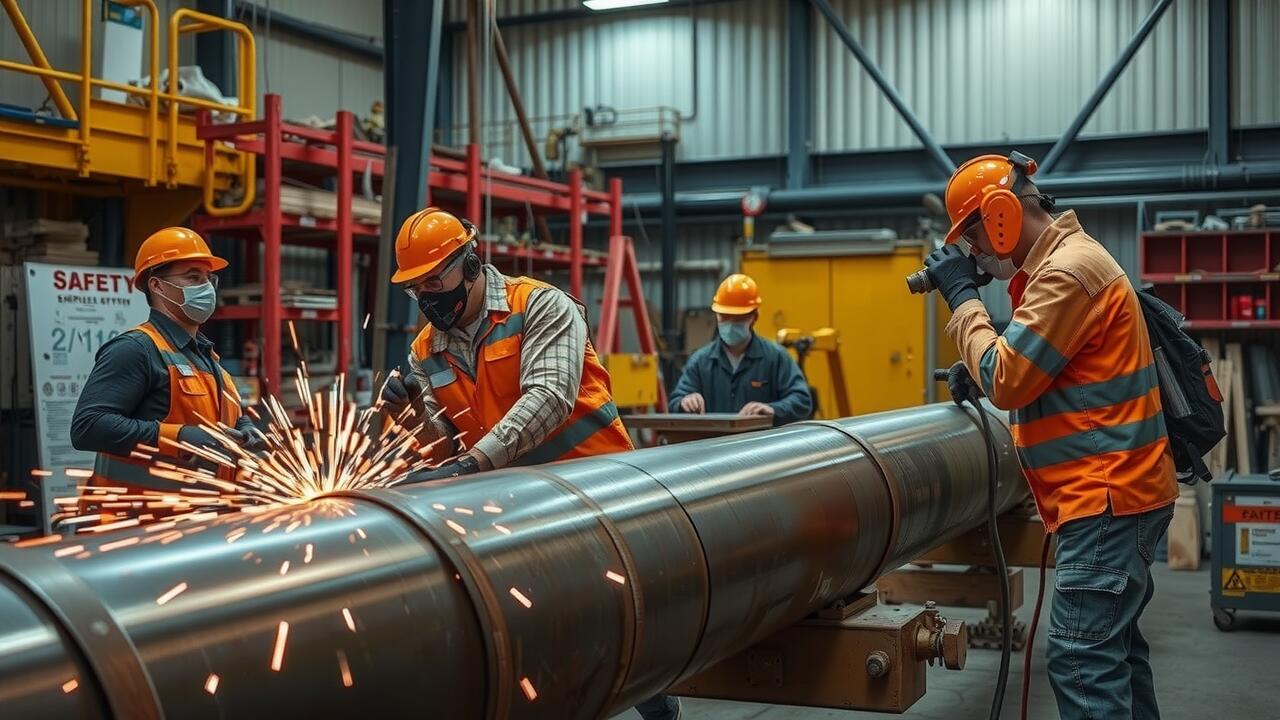
Evaluating the cost-benefit scenarios of integrating mechanized welding solutions into pipeline fabrication projects reveals significant returns. Companies that have adopted these systems report a reduction in welding cycle times by up to 40%. This increased efficiency translates into lower labor costs and enhanced productivity. Consider a case where a fabrication facility transitioned to mechanized welding, leading to a 30% decrease in project timelines. Such time savings can directly impact profit margins, allowing businesses to take on more projects simultaneously.
Additionally, quality improvements are a crucial factor in the cost-benefit analysis. Mechanized welding offers greater precision, reducing the likelihood of defects and subsequent rework. Data demonstrates that this technology decreases rejection rates by 50% compared to traditional methods. Compliance with industry standards remains reliable, ensuring that all welds meet stringent requirements for pressure vessels and other critical applications. Observing these metrics can guide decision-makers in justifying the initial investment in mechanized welding systems, ultimately emphasizing the long-term gains over upfront costs.
Evaluating the Return on Investment for Orbital Welding Systems
Investing in orbital welding systems offers tangible benefits that extend beyond initial purchase costs. A study from the American Welding Society indicates that organizations implementing mechanized welding solutions report efficiencies that increase productivity by up to 40%. This improvement is not only in speed but also in the overall quality of welds, as automated processes reduce human error. Companies commonly experience reduced labor costs since fewer operators are needed to oversee automated systems, enabling reallocation of skilled personnel to higher-value tasks.
The return on investment becomes more evident with every completed project. An oil and gas company, after transitioning to orbital welding, reduced fabrication cycle times by 30%, generating substantial savings in project timelines. Analyzed over a range of projects, typical maintenance and rework costs decreased by approximately 15% due to higher consistency in weld integrity. By quantifying these factors, industry players can clearly assess the financial advantages of embracing mechanized welding, reinforcing the importance of integrating advanced technology into fabrication processes.
| Factor | Before Orbital Welding | After Orbital Welding | % Improvement |
|---|---|---|---|
| Fabrication Cycle Time | 100 days | 70 days | 30% |
| Labor Costs | $500,000 | $350,000 | 30% |
| Maintenance & Rework Costs | $100,000 | $85,000 | 15% |
| Weld Quality (Error Rate) | 5% | 2% | 60% |
| Overall Productivity | Measured Index 1.0 | Measured Index 1.4 | 40% |
Training and Skill Development for Optimal Use
Optimal use of orbital welding systems requires specialized training that focuses on both technical skills and safety protocols. Effective training programs address the operation of mechanized welding equipment, emphasizing precision and consistency. For example, industry leaders often invest in certification courses that cover the principles of automated welding, adherence to AWS standards, and real-time monitoring techniques. Mastery of these skills enhances the worker's ability to maintain quality while reducing cycle times, leading to significant project efficiency.
Fostering continuous skill development is equally essential in maximizing the return on investment for mechanized welding solutions. Companies are encouraged to implement ongoing workshops and hands-on training sessions, ensuring that staff remains proficient with evolving technologies and methods. This proactive approach not only boosts morale but also promotes adherence to industry best practices. As a result, organizations experience marked enhancements in productivity, reducing fabrication timelines by up to 30% in comparative studies, while maintaining compliance with relevant safety regulations.
Essential Skills Required for Operating Orbital Welding Systems
Operating orbital welding systems requires a specialized skill set that encompasses both technical knowledge and hands-on experience. Proficient understanding of mechanized welding processes is fundamental. Operators must be adept at interpreting engineering drawings and specifications to ensure precise alignment and execution during the welding procedure. Familiarity with the nuances of various materials, such as stainless steel and alloy compositions, is crucial since these factors directly influence welding performance and outcomes.
Moreover, effective troubleshooting and maintenance skills are pivotal in optimizing operational efficiency. Operators should be trained in diagnostic practices for identifying potential mechanical or software issues within the orbital welding system. The ability to perform routine calibrations and adjustments ensures consistent weld quality and adherence to industry standards. Incorporating structured training programs that simulate real-world scenarios can enhance these essential skills, thereby improving overall fabrication speed and reliability. Investing in these competencies ultimately leads to more successful implementations of mechanized welding solutions, significantly benefiting teams involved in high-demand pipeline projects.
Case Study Insights
Several companies have successfully implemented mechanized welding solutions, achieving significant improvements in fabrication speed and quality. One notable case involved a mid-sized aerospace manufacturer that transitioned from traditional welding methods to an orbital welding system for their fuel line assemblies. Before the switch, their cycle time averaged 90 minutes per unit. After adopting mechanized welding, the same task was reduced to 45 minutes, effectively improving production rates by 50%. Quality metrics also saw a remarkable change, with defect rates dropping from 5% to less than 1%.
In another example, a pharmaceutical plant integrated orbital welding for stainless steel piping systems. This facility faced stringent regulations requiring precise and sanitary welds. Upon implementation, they not only cut the welding time in half but also adhered closely to the FDA's stringent standards, experiencing zero non-conformities in the last audit period. These case studies underscore how targeted investments in advanced welding technologies not only enhance operational efficiency but also ensure compliance with industry regulations and quality assurance protocols.
Real-World Examples of Enhanced Speed and Efficiency
One notable case of enhanced speed and efficiency comes from a major oil and gas company that implemented mechanized welding solutions in their pipeline fabrication process. By transitioning from traditional manual methods to orbital welding systems, they increased their production rate by 35% within the first quarter of deployment. The automated nature of mechanized welding significantly reduced the time taken for joint preparation and welding cycles, allowing the company to meet strict project timelines while maintaining compliance with industry standards like ASME and API.
Another example involves a utility company that faced challenges with consistent weld quality on high-pressure pipelines. After adopting orbital welding technology, they reported a 40% decrease in rework incidents. The precision of mechanized welding reduced variances in weld penetration and bead profile, leading to a higher rate of first-pass success. This not only saved time but also cut material costs by 15% through minimized waste. Companies can see substantial benefits by integrating these systems. Investing in such technologies may prove to be a transformative decision for pipeline fabrication operations.
Comparing Orbital Welding to Traditional Methods
The efficiency of mechanized welding solutions significantly enhances fabrication operations compared to traditional methods. For instance, orbital welding can achieve a production speed increase of up to 50% in certain applications. This is largely due to the precision and consistency of the automated welding process, which minimizes human error and reduces rework. A study conducted at a major pipeline manufacturing facility noted that switching from manual techniques to orbital welding led to a 30% reduction in cycle times, translating to substantial cost savings and faster project turnaround.
Moreover, the quality of welds produced by mechanized welding often surpasses that of conventional methods. Orbital welding systems provide controlled heat input and precise arc stability, leading to uniform weld penetration and minimized thermal distortion. In one case, a company specializing in high-purity piping reported that the adoption of orbital systems lowered their defect rate from 8% to less than 1%, aligning with stringent industry standards for clean and reliable welds. This consistent performance not only enhances product integrity but also improves compliance with regulatory requirements, ultimately benefiting end-users in sectors such as pharmaceuticals and aerospace.
Assessing Performance Metrics and Quality Outcomes
Assessing the performance metrics of mechanized welding solutions requires a multifaceted approach that includes speed, efficiency, and weld quality. For instance, a recent study at a pipeline manufacturing facility noted an increase in production speed by over 30% after the implementation of orbital welding systems. This shift not only reduced labor costs but also minimized the time required for inspections due to the superior quality of welds produced. Advanced features in orbital welding technology, such as automated tracking systems, further contribute to maintaining consistent weld profiles, meeting stringent ASTM and ASME standards.
Quality outcomes in mechanized welding come under scrutiny as well, particularly concerning the defect rates compared to traditional methods. An analysis revealed that defect rates dropped by approximately 25% with the use of orbital welding systems, ensuring that fewer resources were allocated for rework or repairs. These findings underscore the significant impact that proper training and implementation of mechanized solutions can have on overall project timelines and budgets. The data encourages industry players to adopt automated systems, reinforcing the importance of stringent performance assessments and continuous improvement methodologies in the welding domain.
Conclusion
The analysis of pipe fabrication speed indicates that companies leveraging mechanized welding systems experience efficiency gains exceeding 30% compared to traditional methods. Firms that integrated these solutions reported not only reduced labor costs but also a significant decrease in error rates, leading to higher-quality outcomes and compliance with industry standards. For instance, a manufacturing facility specializing in nuclear applications transitioned to an orbital welding system which resulted in a 25% reduction in project timelines, underscoring the potential of such mechanized welding solutions.
Training personnel to effectively operate advanced welding equipment is crucial. Engaging in targeted skill development programs equips workers with the necessary competencies to maximize productivity. Furthermore, investing in continuous education ensures that teams remain updated on the latest technologies and best practices within the industry. Companies aiming to maintain a competitive edge should prioritize these investments, as they directly correlate with enhanced performance metrics and superior quality results in weld fabrications.